

What Did the Toothless Old Termite Say When He Entered a Tavern?
The answer: "Is the bar tender here?" Here's the joke, why it works, and the real science hiding inside it.
The toothless old termite asked, "Is the bar tender here?" It's a pun: a bartender serves drinks, but "bar tender" also asks whether the wooden bar is tender — soft — since termites eat wood and a toothless termite needs something easy to chew. The joke flips one word into two.
Local help: The jokes are free, and so is the quote. If termites in your San Gabriel Valley home stopped being funny, call or text (626) 409-1584 or get a free quote.
On this page
The answer is: "Is the bar tender here?"
It's a pun. A bartender is the person who serves drinks — but "bar tender" also sounds like asking whether the wooden bar is tender, meaning soft. Termites eat wood, so the old toothless termite is really asking if the bar is soft enough to chew. The joke flips one word into two.
Are termites the same as ants?
No — and this is the question that actually matters for your house. They look similar at a glance, especially when they swarm, but they're easy to tell apart once you know what to check:
| Feature | Termites | Ants |
|---|---|---|
| Antennae | Straight, like a string of beads | Bent at an elbow |
| Waist | Thick and uniform | Pinched and narrow |
| Wings (swarmers) | Both pairs equal length | Front pair longer than back |
| Diet | Wood and cellulose | Almost anything |
Termites and ants really are enemies
This part of the joke's lore is true. Ants are natural enemies of termites: UC IPM notes that ants feed on termites, and that most winged termites die on their swarming flight to predators such as birds, lizards and ants. Against enemies like these, termite colonies keep a soldier caste — big-headed defenders whose whole job is holding the line so the queen and colony survive.
Before you root for the ants, though: an ant colony in your yard will not reliably wipe out a termite colony in your walls. Usually you just end up with both.
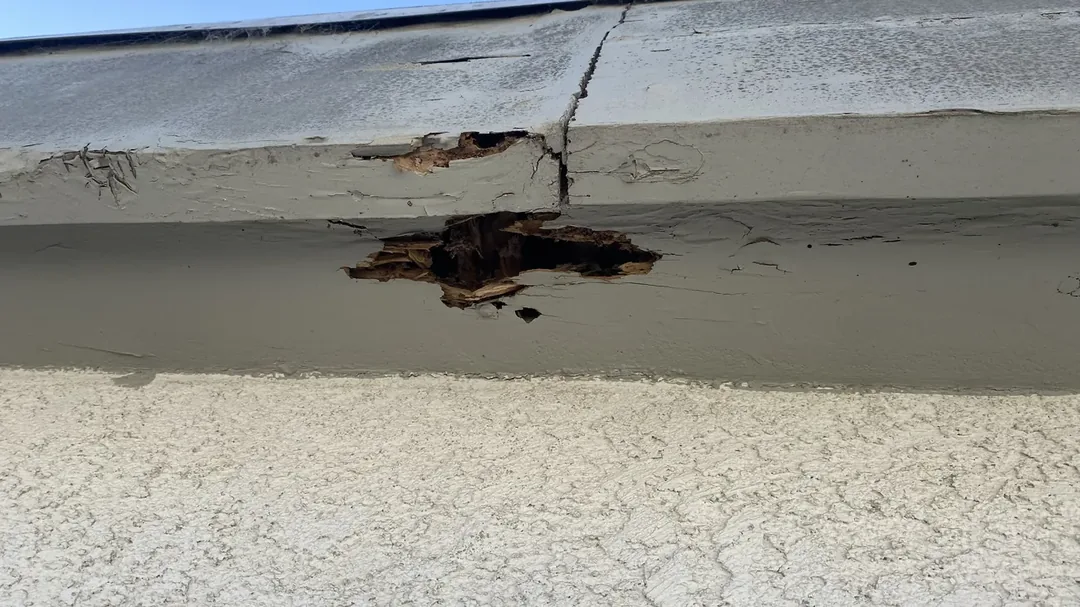
Seen winged "ants" around your windows?
Swarmers — the winged termites that fly off to start new colonies — are often how SGV homeowners first find out they have termites; UC IPM calls swarmers the most common sighting of drywood termites, which otherwise stay hidden inside the wood. A pile of identical-length discarded wings on a window sill is a colony announcing itself.
Late summer through fall is drywood swarmer season in the San Gabriel Valley — if the winged insects are indoors, or you're finding piles of identical shed wings on sills, that's worth a real look. Not sure? Here's how to tell flying termites from flying ants. ExterMetro is a licensed termite company based in Arcadia — call or text a photo to (626) 409-1584; quotes from photos are free.
Sources
Quick Answers
Quick Answers.
What did the toothless termite say when he entered a tavern?
He asked "Is the bar tender here?" — a pun on bartender. Termites eat wood, so the toothless old termite wants to know if the wooden bar is tender (soft) enough to chew.
How can I tell termites from ants?
Termites have straight, beaded antennae, a broad waist and two pairs of wings about the same size. Ants have elbowed antennae, a pinched waist and front wings larger than the hind wings. Both shed their wings soon after swarming, so if you only find bodies, check the antennae and the waist.
Are flying termites worse than flying ants?
Termite swarmers come from a colony mature enough to reproduce, so they mean an established colony is nearby, and swarmers indoors are worth an inspection. Most flying ants are a nuisance rather than a structural threat; the exception is carpenter ants, which UC IPM notes hollow out wood to nest and can cause considerable damage.
Do termites have teeth?
Not teeth like ours. Termites chew with mandibles, hard jaw-like mouthparts, and UC IPM describes soldiers as having larger heads and larger mandibles than workers, which they use to guard the colony against predators. Workers do the foraging and feed the rest of the colony, including the queen, so a toothless termite is strictly a joke.
Do ants eat termites?
Yes. UC IPM notes that ants feed on termites, and that most winged termites die during their swarming flight to predators such as birds, lizards and ants. Termite soldiers guard the colony against predators like these. But an ant colony in the yard will not reliably clear termites out of a house, so treat them as two separate problems.
Could termites really eat a wooden bar?
Drywood termites could. UC IPM lists furniture among the dry, sound wood that drywood termites infest, along with structural lumber, decks, fences and stored lumber, and they do not need contact with soil. The usual sign is a small pile of six-sided pellets below tiny kickout holes in the wood.
Keep Reading
About the Author
Joshua A. Westad is the owner and licensed operator of ExterMetro Termite and Pest Control in Arcadia, CA. He holds California SPCB Company Registration #8828 (Branch 2 & 3), is a licensed WDO inspector, and has worked San Gabriel Valley homes and businesses for over twelve years — hands-on in the field on every kind of job the valley throws at him.
Think you just found termite evidence?
Bag a few wings or pellets, snap a photo, and text it to (626) 409-1584 — quotes from photos are free, and your job stays under licensed ExterMetro oversight from inspection through follow-up.