
Rodent Control That Seals the Deal
Roof rat and mouse control with real exclusion work. Trapping, entry point sealing, attic cleanup and droppings disinfection. The sealing half of that work — the openings, the materials and the fall timing — is covered in detail on rodent exclusion and the fall seal-up.
Trap first, then seal — in that order. Sealing a house while rats are still inside shuts them in, and they either chew a new way out or die somewhere you cannot reach. So the sequence is: find every entry point, trap until the activity stops, then close the openings with metal a rodent cannot chew through, then verify. Rodenticide is not the default here, because a baited rat usually dies inside a wall void and does nothing about the hole it came through. The work carries a one-year warranty.
ExterMetro handles roof rats and house mice across the San Gabriel Valley: trapping the animals already inside first, then sealing every entry point at the roofline, vents, pipe penetrations and garage corners, with attic droppings cleanup and disinfection where it's needed. Owner-led from Arcadia, and the trapping and exclusion work is backed by a one-year written warranty. CA SPCB Reg. #8828 · (626) 409-1584.
The San Gabriel Valley foothills are roof rat country. They travel power lines and tree branches, slip through gaps the size of a quarter, and set up in attics, garages and ivy. Mice need even less, about the width of a dime.
Bait alone does not fix a rodent problem. It can mean dead rodents in your walls and it never closes the front door they used to get in. Our program is built around trapping plus exclusion: we remove the rodents that are there and physically seal the openings, so the next ones cannot follow. Professional droppings cleanup and disinfection are available for attics, garages and storage areas.
Attic cleanup and decontamination. Rodents leave material behind — and sometimes fleas, which is the usual answer when a home has fleas but no pets. Insulation gets matted and soiled, nesting builds up in corners and stored boxes, and droppings collect along the runs. Removal and disinfection of droppings and nesting is part of our rodent work, handled with professional disinfectants and proper protective methods, in the attics, garages and storage areas where it actually accumulates. Whether your job needs it depends on how long they were in and how much they left — and one rule before you go up there with a broom: never sweep or vacuum droppings dry. Read our hantavirus guide first.
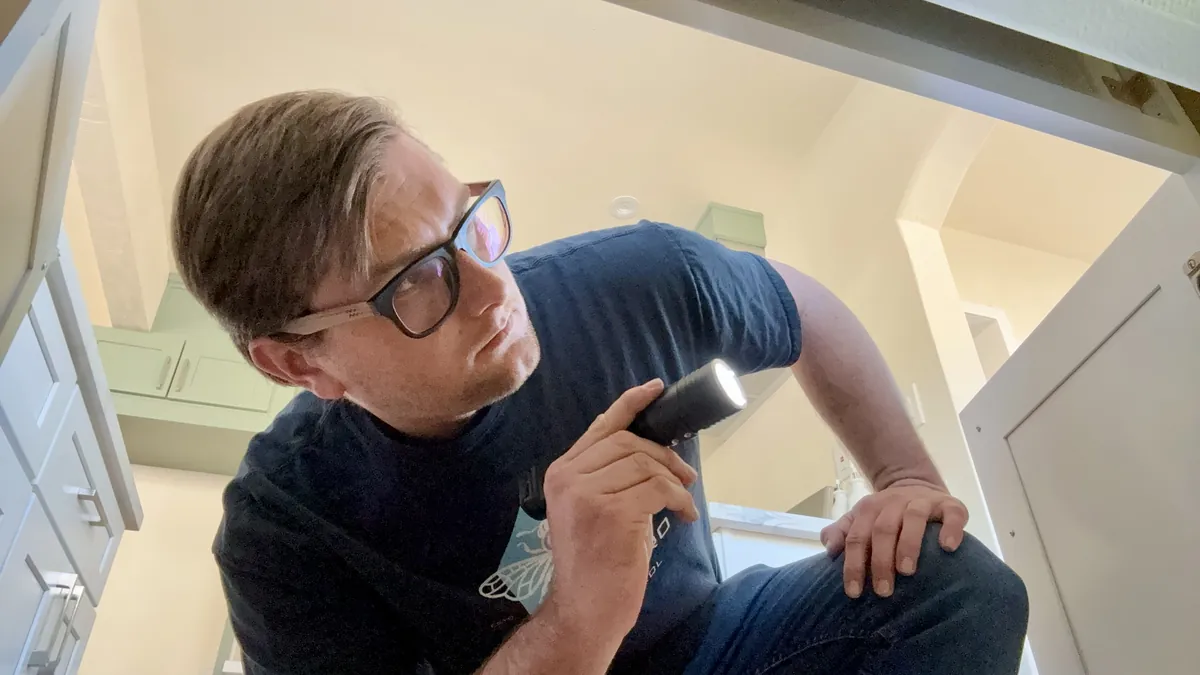
Signs You Have a Problem
- Scratching or scurrying in the attic or walls, usually at night
- Droppings in the garage, pantry, drawers or attic
- Gnaw marks on wires, plastic, wood or food packaging
- Greasy rub marks along beams and entry routes
Our Approach
Full entry inspection
Roofline, vents, eaves, crawl space access, garage seals and utility penetrations. We find every opening, not just the obvious one.
Trap and remove
Strategic trapping that clears the active population without leaving carcasses rotting in your walls.
Seal and sanitize
Exclusion work with rodent-proof materials, plus optional droppings removal and professional disinfection where they nested.
Residential Services
Know The Signs
When To Call About Rodents.
- Scratching or scurrying in the attic or walls, especially at dusk and dawn
- Droppings in the garage, pantry or under sinks — do not sweep or vacuum them
- Gnaw marks on wiring, irrigation lines or food packaging
- Pet food disappearing overnight or nesting material in storage boxes
What shapes the price: the size of the structure, how many entry points need sealing, and whether the attic needs cleanup after the activity stops. Exclusion — physically sealing the building — is the part that makes the result hold, and it is priced by the home, not a flat menu. The exclusion work is backed by a one-year warranty, with the terms in writing before we start.
Remember the hantavirus rule: never sweep or vacuum droppings. Ventilate, keep people and pets away, and read our hantavirus guide or call us to handle cleanup properly.
SGV Field Notes
Roof Rats and the Valley's Citrus Yards.
The San Gabriel Valley's signature rodent is the roof rat — an agile climber that travels fences, wires and tree limbs into attics and walls. Our mature citrus and fruit trees feed them, and older sewer lines and crawlspaces give them harborage. House mice and the occasional Norway rat show up too, but roof rats drive most attic calls here.
Trapping alone never holds, because the yard keeps sending more. Lasting control is exclusion — sealing the ways in — plus a few habits. If you want the diagnosis side first, here's how rats get into houses, the roof rat, Norway rat and mouse comparison sorts which one you have, and the SGV pest calendar shows where fall sits in the year:
- Pick up fallen citrus and fruit, and don't leave pet food out overnight
- Trim tree limbs and vines back from the roofline and fences
- Seal gaps at the roofline, vents, pipes and the garage door — a rat fits through a quarter-sized hole
- Cap or screen attic and foundation vents
Common Questions
Quick Answers.
Traps or poison: which is better?
For homes, trapping plus exclusion wins. Poison can leave dead rodents in inaccessible spots, and it carries secondary risks for owls, hawks and pets. We use rodenticides selectively and to label when a situation truly calls for them.
Can I clean up rodent droppings myself?
Be careful. Sweeping or vacuuming droppings can put hantavirus particles in the air. See our hantavirus page for what to do, or have us handle the cleanup and disinfection.
Why do I keep getting rats even after trapping?
Trapping clears the rats that are in now, but if the entry points stay open, the yard just sends more. The fix that holds is exclusion — sealing the roofline, vents and gaps — combined with trapping, not trapping alone.
How do you get rats out of my attic?
We inspect to find how they're getting in and where they're active, trap out the current animals, then seal the entry points so the next ones can't follow — and the work is backed by a one-year warranty. We'll also point out the citrus, limbs or clutter that's drawing them in.
How small a gap can a rat or mouse fit through?
A rat can squeeze through a hole about the size of a quarter, and a mouse through one the size of a dime. That's why a thorough seal-up checks the roofline, vents, pipe penetrations and garage corners, not just the obvious holes.
How fast can you respond to a rodent problem?
Rodents are a priority — droppings, attic noise and gnawing don't wait. Active rodent problems are prioritized when we schedule, and most rodent jobs start with an inspection and trapping, followed by the exclusion work.
When should I seal my house up for fall?
Before the nights cool off is ideal, but only if nothing is inside yet. If rodents are already in the attic, sealing first shuts them in — they chew a new exit or die in a wall void. So the order matters: we inspect, trap out what is there, confirm the activity has stopped, then seal. Late summer and early fall is the window because you can finish both halves before the heavy indoor push in October and November.
If you trap instead of baiting, will something still die in my walls and smell?
That is exactly why we trap instead of baiting. A baited rat wanders off and dies where nobody can reach it, and you find out through the odor weeks later. Traps hold the animal at a known spot, so it gets removed instead of decomposing in a wall void or in attic insulation. If there is already an odor from a previous bait job, tell us and we will look for the source.
Will they be back next fall?
Rodents keep coming back to the yard — that is the citrus, the fences and the neighbors, and nobody can stop it. What exclusion does is keep the yard from becoming the attic. Once the openings are physically closed, the pressure outside stops turning into activity inside. The trapping and exclusion work carries a one-year warranty, and if something opens up in that window we come back and handle it.
I saw one mouse in the kitchen — does that mean there are more?
Usually yes. A mouse in the kitchen at night is almost never a lone traveler, and by the time you see one in daylight the population is established. Look for droppings behind the toaster, in the silverware drawer and under the sink, and check where the plumbing and gas lines come through the cabinet backs. Mice need a gap the width of a dime, so the same trap-first-then-seal sequence applies — just at floor level instead of the roofline.
Ready for a pest-free property?
Free quotes, honest answers, and licensed service that follows through.