

Flying Termites and Swarmers: When to Worry, and When a Few Are Nothing
Winged termites at a window are one of the most common termite calls we get, and most of the time the real question is not what they are but whether they matter. Here is how to tell.
A few flying termites are not automatically a termite problem. If you find ten or fewer near an open door, window or light on a day termites are swarming outside, and nothing else (no pellets, no mud tubes, no wings piling up at a closed window), they most likely flew in from outdoors and will die within hours. Worry when swarmers come out of the house itself (a window frame, baseboard, wall crack or ceiling), when there are dozens, when the same spot swarms again, or when wings show up with drywood pellets or mud tubes. In Southern California, subterranean termites swarm on warm afternoons after spring rain and drywood termites swarm on hot late-summer and fall days, both in daylight. Bag a few, don’t spray, and text a photo for a free read.
Local help: Not sure what you found? Text a photo of the swarmers or wings to (626) 409-1584 and we will tell you whether it is worth an inspection. Quotes from photos are free.
On this page
- Should you worry? The quick answer by situation
- The ten-or-fewer rule: why a few are usually nothing
- When flying termites do mean a colony
- When termites swarm in Southern California
- Where the swarmers came from
- What to do in the first hour
- Termite swarmers or flying ants?
- What swarmers can and cannot do
- What happens at the inspection
- Sources
- Quick answers
Should you worry? The quick answer by situation
Where the swarmers came from matters more than how many you saw. Find your situation:
| What you see | What it usually means | What to do |
|---|---|---|
| Ten or fewer near an open door, window or light, on a day they are flying outside; nothing else | Fliers from outside; they die within hours indoors | Bag two or three, note the date and the spot, keep an eye on it. No appointment needed |
| A swarm in the yard from a stump, fence post, woodpile or the ground, away from the house | Termites living in the landscape, which is normal here | Not a house problem by itself; if the house has not been inspected in years, schedule a routine check |
| Swarmers coming out of a window frame, baseboard, wall crack, ceiling or attic hatch | A colony inside the structure | Don’t spray. Bag samples, photograph the exact spot, book an inspection |
| Dozens indoors, or a pile of wings at a window that stayed closed | A colony in or right against the house | Book an inspection |
| The same spot swarms again, days later or next season | An active colony at that spot | Book an inspection |
| Wings plus six-sided pellets under a tiny hole in the wood | Drywood termites in that piece of wood | Book an inspection; limited activity is often treatable without a tent |
| Wings plus mud tubes on the foundation, a pier or the garage slab | Subterranean termites coming up from the soil | Book an inspection; treated with in-ground bait stations |
| Big winged insects at the porch light after dark | More likely flying ants or dampwood termites than our two house-infesting termites, which swarm in daylight | Bag one and send a photo |
The ten-or-fewer rule: why a few are usually nothing
Here is the rule we use in the field. If you count ten or fewer winged termites, they are near an open door, window, screen or light, it is a day termites are swarming outside, and you find nothing else (no pellets, no mud tubes, no wings piling up at a window that stayed closed), they most likely flew in from outdoors. That is not something to worry about. Bag two or three, note the date and the spot, and keep an eye on it over the next couple of weeks.
That matches the research. The University of California notes that seeing swarms of flying termites does not always mean a home is infested, and that most swarmers die during the flight, taken by birds, lizards, ants and other insects, while very few ever pair up and start a colony. Swarmers that end up indoors usually cannot reach the moist soil or wood they need and die within hours.
The count is a rule of thumb, not a guarantee. The moment swarmers are coming out of the house itself, the number stops mattering.
When flying termites do mean a colony
These are the signs that move it from keeping an eye on it to booking an inspection:
- They are coming out of the house: a crack in a window or door frame, a baseboard, a wall, the ceiling, the attic hatch or the garage framing. Swarmers only leave a mature colony, so this means one is in the structure.
- There are dozens or more indoors, or a pile of wings keeps growing at a window that stayed closed.
- The same spot swarms again, a few days later or next season.
- Wings show up with drywood pellets: small, hard, six-sided pellets piling up under a pinhole in the wood (frass).
- Wings show up with mud tubes: pencil-width dirt tubes on the foundation, a crawlspace pier or the edge of the garage slab.
- Wood near the spot sounds hollow when tapped, blisters under the paint, or gives when you press it.
Drywood colonies deserve a special note. They are small (the University of California puts them at usually fewer than 1,000 termites) and they live entirely inside the wood, so a drywood swarm is small too. A dozen drywood swarmers coming out of the same window frame is a real colony in that frame, not strays.
When termites swarm in Southern California
Two termites matter in the San Gabriel Valley, and they swarm at different times of year. Both fly in daylight.
| Termite | When it swarms here | Time and weather | Where the colony is | What else you will find |
|---|---|---|---|---|
| Western subterranean | Spring, roughly March through May; sometimes after the first soaking rain in fall | Afternoons on clear, warm, still days after rain | In the soil, coming up into the wood | Mud tubes on the foundation, piers or slab edges |
| Western drywood | Late summer and fall, peaking in August and September | Hot, sunny days, often as a heat wave breaks | Inside the wood itself: eaves, frames, attic, furniture | Six-sided pellets under small kickout holes |
| Dampwood | Summer and fall | After dark, drawn to lights | Damp, decaying wood such as old stumps and logs | Usually a sign of wet, rotting wood rather than a house infestation |
| Formosan | Not a San Gabriel Valley termite; in California it is established only in a small area near San Diego | Dusk, drawn to lights | Soil and carton nests | Not something we see here |
Desert subterranean termites and a second drywood species swarm to lights in California’s southeastern deserts, not here. If you are seeing termites at a light at night in the valley, bring one in for an ID. For the year at a glance, see the San Gabriel Valley pest calendar.
Where the swarmers came from
Swarmers are weak fliers. The University of California notes that new kings and queens generally fly less than 100 meters from their colony, about the length of a football field. So a swarm in your yard came from somewhere close: a stump, an old fence post, buried wood, a neighbor’s house or your own.
Termites in the landscape are normal here. Because most soil around a home has buried roots, stumps or old wood in it, finding swarming termites in your yard doesn’t necessarily mean your house has termites. What matters is whether they are coming out of the house.
The neighbor’s house works the same way. A swarm next door, or a neighbor tenting, tells you termites are active on the block, not that your house has them. It is a good reminder to have yours looked at if it has been a few years (more on what to do when the neighbor’s house is tented).
The time of day is a clue too. Both of our house-infesting termites swarm in daylight, so winged insects circling the porch light after dark are more likely flying ants or dampwood termites. Bag one and we will tell you which.
What to do in the first hour
- Don’t spray. Spraying kills swarmers that would die anyway, does nothing to the colony, and wipes out the evidence that tells an inspector which termite you have.
- Collect a sample. Sweep five to ten swarmers or wings into a zip-top bag or a jar. Wings alone are enough.
- Photograph the spot. One close-up of where they are coming out and one wide shot of the room or wall, so the location is clear.
- Write down the date, the time and the weather. A warm afternoon after rain and a hot fall day point to different termites.
- Look nearby for pellets and mud tubes. Check the sill, the floor under the frame, the garage slab edge and the foundation outside.
- Clean up the rest. Once you have the sample and photos, vacuum the remaining swarmers and wings. If there are pellets, sweep them up and look again in a few days; new pellets mean the colony is active.
- Decide with the table above. A few by an open window and nothing else: keep watching. Any of the worry signs: text the photo to (626) 409-1584 or book an inspection.
Termite swarmers or flying ants?
Plenty of flying termites turn out to be flying ants, which swarm in the same seasons. Three checks settle it: termites have a thick, straight waist, straight beaded antennae, and four wings of equal length; flying ants have a pinched waist, elbowed antennae, and front wings longer than the back pair.
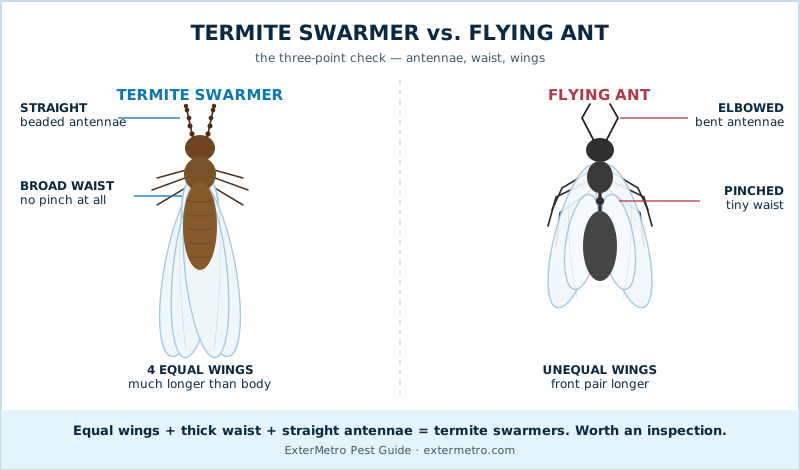
Shed wings are the other giveaway: termites drop theirs within minutes of landing and leave small piles of identical wings. Our termite swarmers vs. flying ants guide goes through the check step by step.
What swarmers can and cannot do
- They don’t bite or sting, and they don’t eat wood. The damage is done by the workers that stay hidden in the colony (do termites bite?).
- Killing swarmers doesn’t stop anything. The colony that produced them keeps feeding; here is how a colony works.
- Subterranean swarmers that land indoors die without the moist soil they need to start a colony.
- Drywood swarmers are different. A pair can start a new colony by boring into a crack in exposed wood outdoors, such as eaves, fascia or a patio cover, and the colony takes years to grow large enough to notice. That is why exposed wood deserves a regular look in drywood country (see how to prevent termites).
What happens at the inspection
A real inspection covers the whole structure, not just the window where you saw them: eaves and fascia, the foundation line for mud tubes, the garage, window and door frames, the attic, and the crawlspace if there is one. You get the findings in writing, including any areas that could not be inspected, and the treatment follows the evidence: localized no-tent treatment for limited, accessible drywood activity, in-ground bait stations for subterranean termites, and fumigation only when drywood activity is widespread or out of reach. Here is what a real termite inspection covers.
If you want treatment options, the quote for the work is free. Bring the bag of swarmers or wings; it helps.
Sources
Common Questions
Quick Answers.
Should I worry about a few flying termites in my house?
Usually not. Our rule of thumb: ten or fewer near an open door, window or light, on a day termites are swarming outside, with no pellets, mud tubes or wings piling up at a closed window, most likely flew in from outdoors and will die within hours. Bag a couple, note the date and the spot, and keep an eye on it. Worry if they are coming out of the house itself.
Do flying termites mean I have an infestation?
Not always. Where they came from matters more than how many there are. Swarmers coming out of a window frame, baseboard, wall or ceiling, dozens indoors, or swarms from the same spot again mean a colony in the structure. A few near an open window on a swarm day usually flew in.
Where do flying termites come from?
From a mature colony nearby. Swarmers generally fly less than 100 meters, so a swarm in your yard came from a stump, buried wood, a fence, a neighbor’s house or your own. Swarmers coming out of your walls or frames came from a colony inside the house.
Will flying termites die on their own?
Yes. Indoors they cannot reach the moist soil or wood they need and die within hours, and most swarmers outdoors are eaten by birds, lizards and ants. The colony that produced them is unaffected.
Should I spray flying termites?
No. Spraying kills insects that would die anyway, does nothing to the colony, and destroys the evidence an inspector uses to tell which termite you have. Bag a few, take photos, then vacuum the rest.
When do termites swarm in Southern California?
Subterranean termites swarm on clear, warm afternoons after spring rain, roughly March through May, and sometimes after a soaking fall rain. Drywood termites swarm on hot, sunny days in late summer and fall, peaking in August and September. Both fly in daylight.
Why are there flying termites at my porch light at night?
In the San Gabriel Valley they are more likely flying ants or dampwood termites. Our two house-infesting termites, subterranean and drywood, swarm in daylight. Bag one and send a photo for an ID.
Can flying termites start a colony in my house?
Subterranean swarmers that land indoors die without moist soil. Drywood swarmers can start a colony by boring into exposed wood such as eaves, fascia or a patio cover, and it takes years to grow, which is why exposed wood deserves a regular inspection.
Do flying termites bite or eat wood?
No. Swarmers don’t bite or sting and don’t feed on wood. The damage is done by the worker termites that stay hidden inside the colony.
My neighbor had a termite swarm. Do I have termites?
Not necessarily. It means termites are active nearby, which is common here. Check your own house for the worry signs, and if it has not been inspected in a few years, now is a good time.
How soon should I get an inspection after seeing swarmers?
If you saw any of the worry signs, book one in the next couple of weeks and keep your sample. Termite damage builds over months and years, not overnight, so there is no need for a same-day emergency call. A few strays by an open window and nothing else can just be watched.
Keep Reading
About the Author
Joshua A. Westad is the owner and licensed operator of ExterMetro Termite and Pest Control in Arcadia, CA. He holds California SPCB Company Registration #8828 (Branch 2 & 3), is a licensed WDO inspector, and has worked San Gabriel Valley homes and businesses for over twelve years — hands-on in the field on every kind of job the valley throws at him.
Think you just found termite evidence?
Bag a few wings or pellets, snap a photo, and text it to (626) 409-1584 — quotes from photos are free, and your job stays under licensed ExterMetro oversight from inspection through follow-up.