
Termites in the San Gabriel Valley
Termites work silently for years. Here's how to identify the two types that matter in the SGV and the signs they leave behind.
- Drywood: live inside wood, leave pellet piles
- Subterranean: live in soil, build mud tubes
- Swarmers: equal-length wings, straight body (not ants)
- Shed wing piles on sills signal a swarm
- Hollow-sounding or blistered wood
What they look like
Two kinds of termite matter in the San Gabriel Valley. Drywood termites live entirely inside dry wood — attics, eaves, framing and furniture — and need no contact with soil. Subterranean termites live in the soil and build mud tubes up to reach wood. The termites most homeowners actually see are the swarmers (winged reproductives).
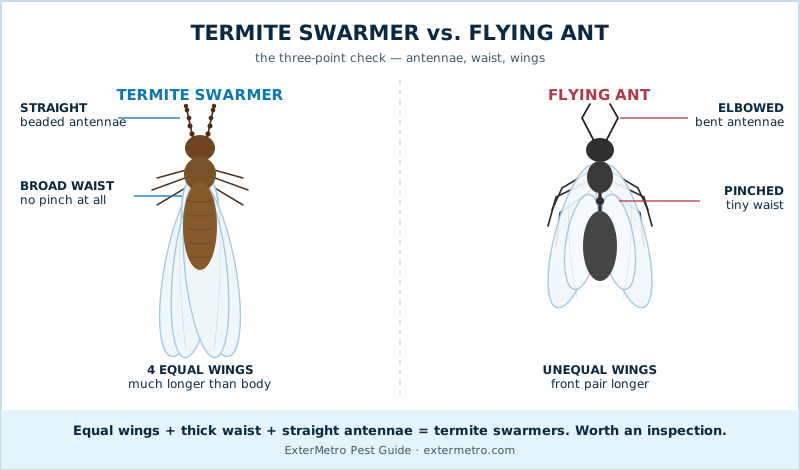
Swarmers are routinely mistaken for flying ants. The tells: termites have straight, bead-like antennae, a thick uniform waist, and two pairs of equal-length wings — ants have elbowed antennae, a pinched waist and unequal wings. Here's the full swarmer-vs-flying-ant check.
Drywood vs. subterranean termites
| Feature | Drywood termites | Subterranean termites |
|---|---|---|
| Where they live | Inside dry wood, above ground | In soil, travel up to wood |
| Evidence they leave | Pellet piles, kick-out holes | Mud tubes on foundations |
| Moisture needs | Low — no soil contact | High — tied to soil moisture |
| Typical treatment | Spot treatment, heat, or fumigation | Bait stations or soil treatment |
Where they live
Drywood termites infest sound, dry wood above ground and can start a colony anywhere a swarmer lands and bores in — which is why drywood damage often shows up in attics, window and door frames, eaves and even wood furniture.
Subterranean termites nest in the soil and travel through pencil-width mud tubes on foundations, piers and crawl-space walls to reach wood. They're tied to moisture, so leaks, poor drainage and earth-to-wood contact around SGV homes raise the risk.
Signs of termites
The early warning most people catch is a pile of discarded wings on a windowsill or floor after a swarm, or small piles of pellets (drywood frass) that look like coarse sand or coffee grounds beneath infested wood. Subterranean activity shows as mud tubes on the foundation.
Later signs include wood that sounds hollow when tapped, blistered or rippled paint, and tight-fitting or sagging floors and trim. Our guide to the signs of termites walks through each one.
How termites are controlled
If you are still identifying what you found, the termite evidence guide goes sign by sign, including the look-alikes.
Most drywood jobs in the SGV can be handled with a no-tent localized treatment — fumigation is not the default (the full spot-vs-tent decision framework). A widespread drywood infestation may call for whole-structure fumigation (the fumigation prep guide covers how to get the house ready). Subterranean termites are handled with in-ground bait stations and, where it fits, targeted soil treatment.
As a licensed operator holding both the general (Branch 2) and termite (Branch 3) registrations, ExterMetro gives an honest assessment instead of a tent-first default — see what to expect during treatment or our termite control page. For ongoing coverage after treatment, an annual inspection-and-warranty program keeps the warranty alive year over year.
Related Pests
Quick Answers
Quick Answers.
What are the first signs of termites?
The earliest signs are usually a pile of discarded wings after a swarm, small piles of pellets beneath wood (drywood termites), or mud tubes on the foundation (subterranean termites). Hollow-sounding or blistered wood often shows up later.
What's the difference between drywood and subterranean termites?
Drywood termites live entirely inside dry wood above ground and leave pellet piles; subterranean termites live in the soil and build mud tubes to reach wood. The two need different treatments, so correct identification matters.
How do I tell termite swarmers from flying ants?
Termite swarmers have straight antennae, a thick uniform waist, and two pairs of equal-length wings. Flying ants have elbowed antennae, a pinched waist, and front wings longer than the back pair.
How much damage can termites do?
Termites work silently for years, so the damage is often structural by the time it's found — weakened framing, floors and trim. Catching them early through regular inspection is far cheaper than repairing extensive damage later.
Do I always need to tent for termites?
Not always. A localized drywood infestation can often be handled with a targeted spot treatment, while whole-structure fumigation is reserved for widespread drywood activity. An honest inspection determines which is warranted — there's no tent-first default here.
How often should I have a termite inspection?
For most San Gabriel Valley homes, a professional inspection every one to two years is reasonable, and sooner if you spot swarmers, wings or pellets. Regular checks catch colonies while they're small and inexpensive to treat.
Dealing with termites?
Free quotes, honest answers, and licensed service that follows through.